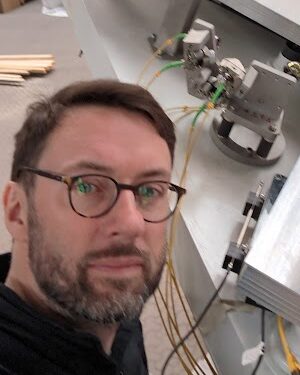
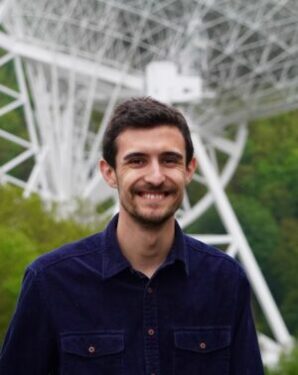
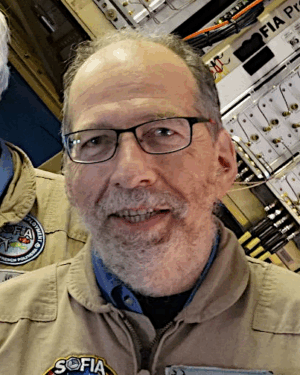
The people behind the German contributions to CCAT — engineers, astronomers, and software builders at the Universities of Cologne and Bonn. Use the filters to see who works on what.
CCAT Data Center
The CCAT data center is located in the IT Center of the University of Cologne (ITCC). The data center stores data from all CCAT instruments and is also the central location for data calibration and analysis. In close cooperation with the ITCC, our team is developing a data transfer system from the observatory to the ITCC and establishing the data calibration and analysis workflows.
CHAI instrumentation and software
The CCAT Heterodyne Array Instrument (CHAI) is a modular, dual-frequency band array receiver and is one of two instruments used for CCAT’s early science observations. The single-pixel version of the CHAI, miniCHAI, will be on the telescope as the first-light instrument covering the 455-495 GHz and 800-820 GHz frequency ranges simultaneously. We are developing both instruments using our expertise built up over many years of experience with heterodyne receivers and mixers, including instruments for the KOSMA 3-meter telescope, NANTEN2, and (up)GREAT at SOFIA, among others.
Developing software for instrument operation and observation is also an important part of our work. This includes optimizing instrument parameters and observing schemes, generating command sequences to synchronously operate telescope movement and instrument data acquisition, and creating an interface for remote observing. It also involves collecting and organizing instrumental and observing information needed for data analysis and a long-term data archive. Although we use the same framework as in previous observatory projects, we continuously improve the operational scheme based on our experience. Additionally, each instrument and telescope is unique, necessitating extensive adaptation. Well-tested, optimized software is essential for efficient observation and, ultimately, for the quality of the scientific output.
CHAI simulation and data reduction
Astronomical data usually consists of the digital output signals from detectors, and various ancillary information, such as instrument status diagnostics and telescope pointing information. For the scientific analysis, the effects of the instrument and the atmosphere must be corrected, and the signal must be converted to physical units, such as brightness (the calibration process).
We are developing software to perform this process for the CCAT Heterodyne Array Instrument (CHAI), which is one of two instruments used for CCAT’s early science observations. Although a standard calibration procedure has been established with previous projects, the continuously increasing data size makes classical methods more challenging. It is important to develop this software using simulated data before actual observatory operations begin because different calibration methods may require modifications to observing procedures.
EoR-Spec simulation and data reduction
The EoR-Spec is a Fabry-Perot spectrometer module of Prime-Cam, which is one of the two first-generation instruments of CCAT. It is designed to study the extremely faint and distant galaxies from the epoch of reionization (EoR) by observing the redshifted emission line of carbon ions, using the line intensity mapping (LIM) technique. The EoR-Spec dataset is quite complex; each detector in the detector array detects emission at a different frequency and position in the sky. Such data is continuously produced as timestream data. Therefore, we need simulations to optimize the observing strategy and develop the data reduction pipeline. While the EoR-Spec itself is developed by our collaborators at Cornell University, we are significantly contributing to simulations, observation planning, and data reduction pipeline development.
Galactic Ecology (GEco)
Galactic Ecology (GEco) is one of the science programs of CCAT, aiming to study the cosmic cycling of matter. Using the CCAT Heterodyne Array Instrument (CHAI), we will obtain spectra with very high spectral resolution, enabling us to study the chemical composition and dynamics of interstellar gas. Key questions include how molecular clouds and dense structures form and evolve, how stellar feedback impacts the evolution of the interstellar medium, how turbulence is driven in interstellar clouds, and how these processes depend on the environment. We are active and leading members of this science team. Many of us are also members of the FEEDBACK (Schneider et al. 2020) and HyGAL (Jacob et al. 2022) Legacy Programs of the Stratospheric Observatory for Infrared Astronomy (SOFIA), which provide excellent complementary datasets.
Line Intensity Mapping
Line intensity mapping (LIM) is a technique that measures the aggregate integrated signal of unresolved galaxies over a wide area at low spatial resolution, thereby determining spatial signal fluctuations due to large-scale structure across cosmic time, and is the basis of one of CCAT’s large surveys (CCAT-Prime Collaboration et al. 2023). The goals of the deep spectroscopic survey (DSS) are to probe the epoch of reionization (EoR) using the redshifted emission line from carbon ions ([CII]) over two 4 deg² fields, as well as to study the peak epoch of star formation at lower redshifts using the emission lines from carbon monoxide (CO). This will be accomplished using the spectroscopic module (EoR-Spec) of the Prime-Cam instrument on the FYST. We are active and leading members of the science team of the CCAT line intensity mapping program, where we predict the expected signal of each line and develop methodology to separate out the relevant components coming from different redshifts along the line of sight (Karoumpis et al. 2022, 2024; Clarke et al. 2024).
Mirror Alignment and Holography
The FYST telescope consists of two 6-meter mirrors. The mirrors are constructed from multiple panels, 77 on M1 and 69 on M2, with panel sizes of 67 cm x 75 cm and 70 cm x 71 cm respectively. The mirror panels are mounted on a carbon-fiber backup structure and aligned using 8 adjusters per panel. 3 adjusters determine the position of each mirror panel in the x-y plane, while 5 adjusters control the panel position in the Z axis. These adjusters are used to precisely position the mirror panels, ensuring that the surface deviation between the designed and actual mirror surfaces is less than 10.7 micron (goal of 7 micron) over both mirrors. If the mirror shape deviates significantly from its ideal shape, it will affect the astronomical signal and instrument efficiency.
To achieve a surface precision at the 10-micron level, two independent systems will be deployed on the telescope: a microwave holography system and a laser metrology system. The holography system uses two heterodyne receivers to measure the telescope’s responses to a 300 GHz source located 300 meters away from the telescope. The mirror shapes can then be reconstructed from the measured data. We have developed a new metrology system, including hardware and software, for the special FYST optics, capable of simultaneously measuring panel deviations across both mirrors.
The laser metrology system measures the positions of the mirror panels by reflecting a laser signal from 6 sources onto retroreflectors on the mirror surfaces. The system is provided by the German company ETALON, with whom we work closely. Both systems generate a table of adjuster offsets, which are then applied to the mirror panels. Both systems can work independently and provide a dual approach to achieving this high level of mirror accuracy.
Observatory software development
The observatory software issues commands for pointing FYST to astronomical targets and for executing complex scanning patterns. It applies the telescope’s pointing model to ensure accurate alignment with the target positions provided by the instruments’ software. An important subsystem is the scheduler, which dynamically selects the most suitable observation based on prevailing conditions such as time, weather, and atmospheric transparency. The housekeeping system complements this by continuously recording environmental parameters and telescope state variables, including meteorological data and temperature sensor readings. If environmental conditions require it, the observatory software autonomously brings the telescope into a safe state to protect the system. The software also interfaces with the CCAT Data Center: it interacts with the central Observation Database and prepares observational data on-site for efficient transfer to the data center. Our team is developing these subsystems in close collaboration with other CCAT consortium members.
Optical Pointing
It is crucial that the telescope can point very precisely to the intended location in the sky. The telescope pointing model is described by parameterized properties, such as encoder offsets and imperfect tilt of the axes. These parameters are determined and monitored through dedicated observations using optical pointing cameras mounted on the elevation housing. Our team is responsible for defining the camera specifications, developing the operating and analysis software, and verifying or modifying (if needed) the telescope parameters that describe the pointing model. An accurate pointing model is essential for the interpretation of the astronomical data.
I. Physics Institute, University of Cologne, Zülpicher Straße 77, 50937 Cologne & Max-Planck Insitute for Radio Astronomy, Auf dem Hügel 60, 53121 Bonn
I. Physics Institute, University of Cologne, Zülpicher Straße 77, 50937 Cologne & Max-Planck Insitute for Radio Astronomy, Auf dem Hügel 60, 53121 Bonn