01The collaboration
The CCAT Collaboration (Cerro Chajnantor Atacama Telescope, CCAT) is a consortium including Cornell University, the German Universities Cologne and Bonn as well as the Max Planck Institute for Astrophysics, and a Canadian University Consortium. The collaboration is responsible for building instruments that will be deployed on FYST, observing, analyzing data, and publishing scientific results.
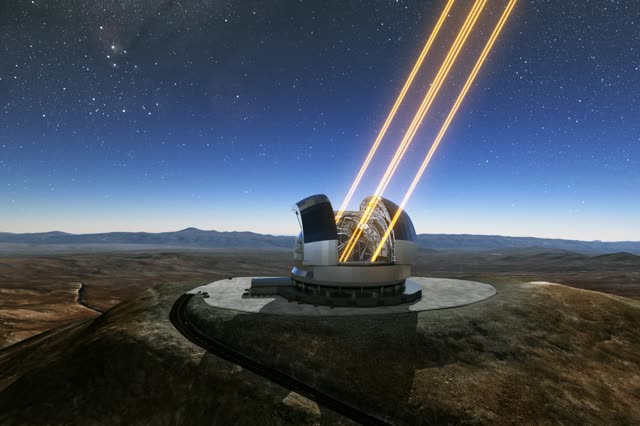
FYST will be a telescope with an innovational 6-m clear aperture, modified mirror crossed-Dragone optical design. It is currently being assembled on 5600 m elevation site on Cerro Chajnantor in the Chilean Atacama Desert and will operate in the millimeter to submillimeter (100 GHz – 1.5 THz) range. The extraordinary location at high-altitude in the extremely dry Atacama Desert will allow measurements with a strongly reduced influence of atmospheric water molecules.
This page shows information about the German CCAT Consortium as well as the German contributions to the CCAT collaboration. General Information about CCAT/FYST can be found on the CCAT collaboration page: www.ccatobservatory.org














02German contributions
Instrument · Cologne
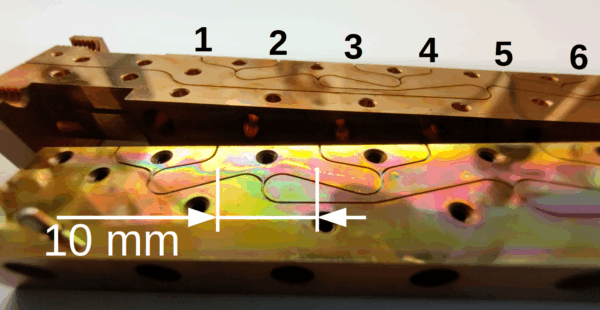
CHAI
The CCAT Heterodyne Array Instrument: a 2 × 64 pixel high-resolution spectrometer built in Cologne to study the cycle of interstellar matter in the Milky Way and nearby galaxies — the engine of the Galactic Ecology survey.
Software & Data · Cologne
CCAT Data Center
Every byte FYST records flows through Cologne: we host the data, run the entire reduction, and serve calibrated, science-ready products back to the collaboration.
Telescope · Germany → Chile
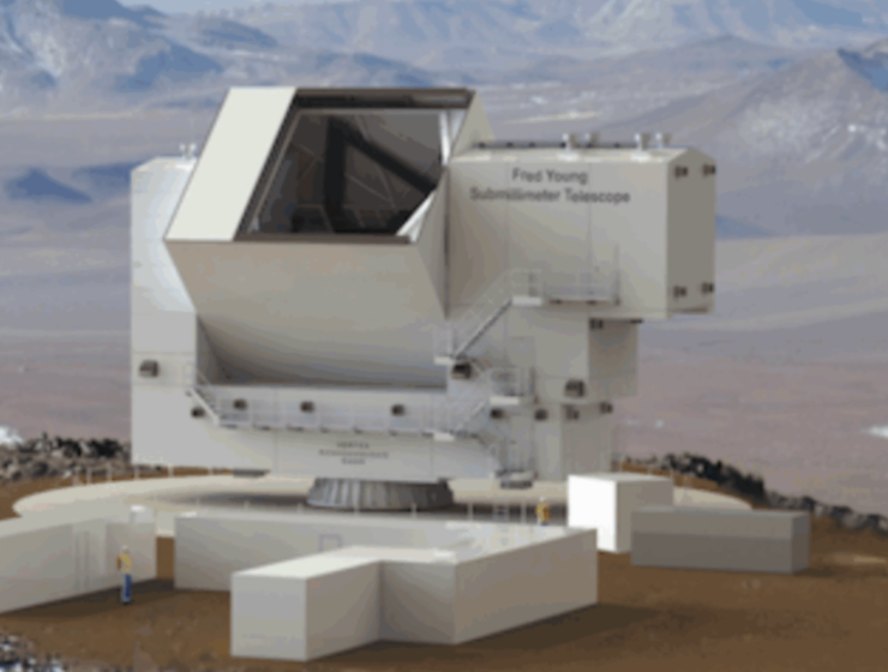
FYST
The telescope was designed and built by CPI Vertex Antennentechnik, GmbH in Germany. It was fully built and tested by Wessel GmbH, then partially disassembled again and shipped to Chile — and is now rising again at 5600 m.
03Road to first light
A telescope built in Germany, tested, taken apart, and carried across the Atlantic to a mountaintop in Chile.
until 2024
Built & tested
Full assembly and verification by CPI Vertex Antennentechnik and Wessel GmbH, Germany.
Winter 2024 / 25
Shipped to Chile
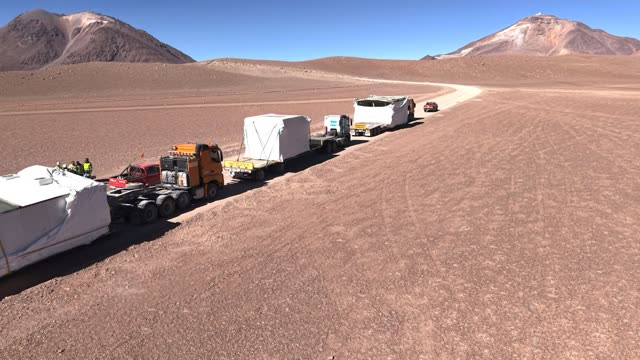
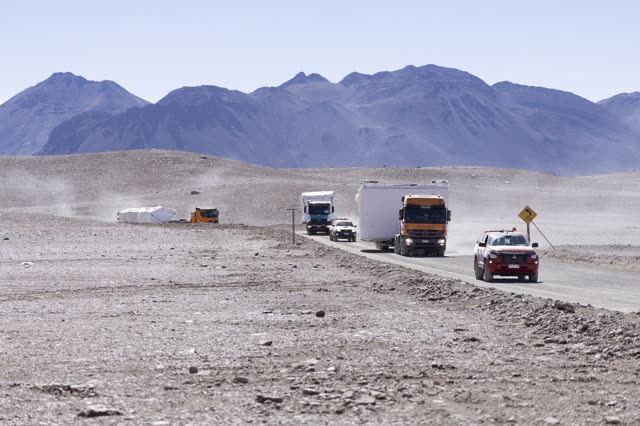
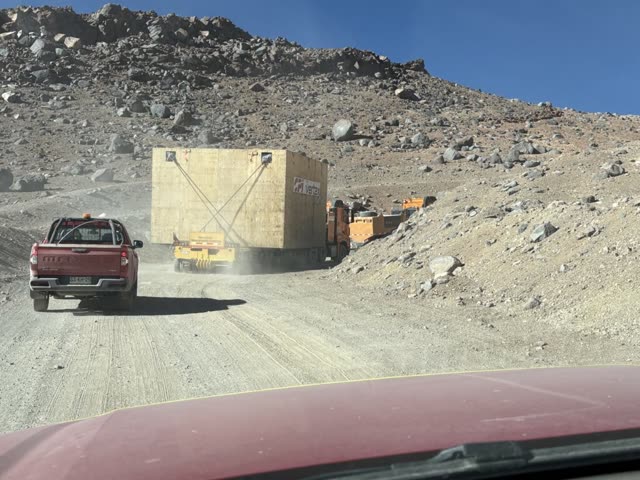
Partially disassembled and transported to the Atacama Desert.
2025
Reassembly at 5600 m
Re-erection on the summit of Cerro Chajnantor, above half of Earth's atmosphere.
Spring 2026
First light
FYST opens its eyes on the submillimeter sky.
§Funding & support
The CCAT project, FYST and Prime-Cam instrument have been supported by generous contributions from the Fred M. Young, Jr. Charitable Trust, Cornell University, and the Canada Foundation for Innovation (CFI) and the Provinces of Ontario, Alberta, and British Columbia. The construction of the FYST telescope was supported by the Großgeräte-Programm of the German Science Foundation (Deutsche Forschungsgemeinschaft, DFG) under grant INST 216/733-1 FUGG, as well as funding from Universität zu Köln, Universität Bonn and the Max Planck Institut für Astrophysik, Garching.